Weekly pharma news India: GLP-1 price war, US tariff threat & API crisis. - April First Week
Pharma News India Weekly (29 March – 04 April 2026): GLP-1 Price War, US Tariffs, and Supply Chain Crisis
The week of March 29 to April 4, 2026, has been one of the most volatile periods in recent memory for the Indian pharmaceutical industry. From a seismic shift in the weight-loss drug market to geopolitical shocks threatening supply chains, stakeholders have navigated a perfect storm of regulatory changes, pricing pressures, and international trade disputes.
As the "Pharmacy of the World," India’s pharma landscape is evolving at breakneck speed. This weekly update covers the landmark patent expiry of semaglutide, aggressive price wars, the looming threat of US tariffs, government interventions to secure supply chains, and crucial regulatory shifts aimed at improving patient access.
Top 5 Headlines This Week
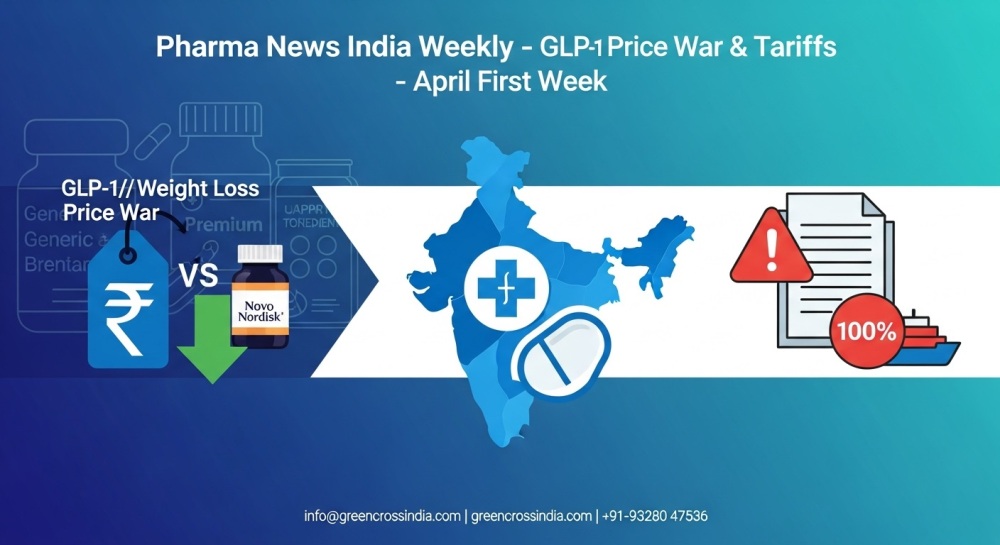
- The GLP-1 Gold Rush: Following the patent expiry of semaglutide, over a dozen Indian players (Sun Pharma, Dr. Reddy’s) launch generics, forcing innovator Novo Nordisk to slash prices by nearly 50% .
- Trump’s Tariff Sword: The US administration proposes 100% tariffs on patented drugs, sending Nifty Pharma into a tailspin, though Indian generics are temporarily spared.
- Supply Chain Distress: The West Asia conflict triggers a raw material crisis, spiking prices of APIs like Paracetamol and Metformin by up to 90%, prompting government duty waivers.
- Regulatory Crackdown: Authorities clamp down on the "wild west" marketing of weight-loss drugs, banning surrogate advertisements and eyeing CCTV mandates for pharmacies.
- Mergers & Expansions: Warburg Pincus eyes Koye Pharma, while Eli Lilly bets $7.8 billion on sleep drugs, signaling robust M&A activity.
1. GLP-1 Revolution: The Semaglutide Patent Cliff and Price War
The most significant story dominating latest pharma news this week is the expiration of Novo Nordisk’s patent for semaglutide (the molecule behind Ozempic and Wegovy) on March 20. The aftermath has reshaped the diabetes and obesity treatment landscape in India.
Innovator Strikes Back: Novo Nordisk’s Aggressive Price Cuts
In a move that surprised analysts, Novo Nordisk did not wait to be usurped by generics. Effective April 1, the Danish major announced dramatic price reductions.
- Ozempic (Diabetes): Prices slashed by 36% . The starting dose (0.25mg) now costs ₹5,660 per month, down from ₹8,800.
- Wegovy (Weight Management): Prices cut by 48% , bringing the starting monthly cost to ₹5,660.
- Strategy: Vikrant Shrotriya, MD of Novo Nordisk India, stated this is a "patient-centric" move to expand access. By pricing close to the generics (approximately ₹4,000–₹5,600 range), Novo is leveraging its brand equity, cold chain superiority, and physician trust (endocrinologists) to retain market share.
The Indian Generics Onslaught
Within days of the patent lapse, the market flooded with cheaper alternatives:
- Sun Pharma: Launched 'Noveltreat' (weight management) starting at ₹3,600 and 'Sematrinity' (diabetes) starting at ₹750 per week.
- Dr. Reddy’s: Priced its diabetes pen 'Obeda' at ₹4,200 per month.
- Natco & Eris: Launched pen-based versions in the ₹4,000–₹4,500 range.
Industry estimates suggest over 50 brands could enter the market this year. However, doctors caution that these are powerful prescription drugs; a study in The Lancet warns of potential side effects like pancreatitis and bowel obstruction if misused .
Regulatory Scrutiny on Marketing
As demand skyrocketed, so did dubious marketing. The Central Drugs Standard Control Organisation (CDSCO) issued a strict advisory against "surrogate advertising"—where companies run "awareness" campaigns for obesity without naming the drug. The Advertising Standards Council of India (ASCI) has been put on notice, and state drug controllers are auditing wellness clinics to prevent off-label over-the-counter sales.
2. Geopolitical Shock: US Tariffs and the West Asia Crisis
Global geopolitics have introduced severe headwinds for Indian pharma exporters.
The US Tariff Threat (100% on Patented Drugs)
On April 2, reports emerged that the Trump administration is preparing a 100% tariff on imported patented pharmaceuticals under Section 232 of the Trade Expansion Act (national security) .
- Impact on India: Think tank GTRI clarified that India is largely protected in the short term, as 90% of India’s $9.7 billion pharma exports to the US are generics, which were exempted.
- The Catch: The exemption is temporary (review in 12 months). Companies like Sun Pharma (which has branded/specialty sales) saw stock volatility, though analysts noted limited immediate impact.
- Industry Response: Indian firms are accelerating local manufacturing in the US to hedge against future risks. Commerce Minister Piyush Goyal is actively negotiating a Bilateral Trade Agreement (BTA) to secure preferential access.
West Asia Conflict: API Shortages and the LPG Crisis
The war in the Middle East created a "near-crisis" for domestic manufacturing. The diversion of propylene for LPG production choked the supply of Isopropyl Alcohol (IPA) —a solvent critical for life-saving drugs.
- Raw Material Inflation: Prices of Active Pharmaceutical Ingredients (APIs) skyrocketed. Metformin rose 90%, Paracetamol 50% in a month, squeezing margins for essential medicines.
- Govt Intervention: The Finance Ministry issued Notification No. 12/2026-Customs, granting a full customs duty exemption on 40+ critical petrochemical inputs (Methanol, Phenol, IPA) until June 30.
- Logistics Nightmare: Exporters face a 40% surge in freight costs and rerouted vessels due to the Strait of Hormuz disruptions.
3. Regulatory & Policy Reforms
The government and judiciary were active this week in clearing backlogs and tightening compliance.
Delhi High Court: Dr. Reddy’s vs. Novo Nordisk
In a significant trademark battle, the Delhi High Court restrained Dr. Reddy’s from using the brand 'Olympiq' for its semaglutide drug, finding it deceptively similar to Novo’s 'Ozempic'. Dr. Reddy’s was granted 30 days to clear existing stock before renaming the brand to 'Olymra' .
The court emphasized that public health (ensuring diabetic patients get their meds) outweighed the destruction of inventory.
Loose Tablets & Pharmacy Reforms
In a patient-friendly move, the DCGI plans to mandate pharmacies to dispense cut strips/loose tablets. Currently, patients are forced to buy entire strips of 10-15 tablets for a 5-day course, leading to wastage and antibiotic misuse. While retailers worry about inventory management and loss of batch information, the proposal aims to reduce medicine costs and environmental waste.
Licensing Crackdown
The Drug Consultative Committee (DCC) proposed debarring firms whose licenses were cancelled for GMP violations from applying for fresh licenses under a different name. This "regulatory memory" aims to stop fly-by-night operators from re-entering the market.
4. Pharma Business: Earnings, M&A, and Innovation
M&A Activity: Warburg Pincus
Global PE fund Warburg Pincus is in advanced talks to acquire Koye Pharma for approximately ₹300 crore. This marks Warburg’s third acquisition (after Integrace and Maneesh) as it builds a mid-sized pharma platform in India. Koye specializes in women’s health, respiratory, and cardio-diabetes segments.
Cipla’s Q3 Performance
Cipla reported muted Q3 numbers due to a sharp fall in US sales (Revlimid generic decline and Lanreotide supply constraints). However, domestic sales grew 10% YoY, outpacing the market in respiratory and cardiac therapies. UBS Research remains positive on the medium-term pipeline.
Bioeconomy Boom
A report by Endiva Partners noted that India’s bioeconomy is set to hit $200 billion this fiscal, contributing nearly 5% to GDP. With over 2,500 biotech startups and 600 research institutes, the focus is shifting from volume generics to innovation-led biopharma.
5. Public Health: The Dark Side of Weight-Loss Drugs
While GLP-1 drugs are a breakthrough, health experts raised red flags this week.
- Vision Risks: Ophthalmologists warned that rapid blood sugar correction by GLP-1 drugs could temporarily worsen diabetic retinopathy or, in rare cases, cause NAION (eye stroke).
- The "Mounjaro Bride" Trend: A worrying social trend emerged where clinics in Delhi and Hyderabad offer "pre-wedding" weight-loss packages using these injections. Doctors report that up to 20% of queries for obesity injections are from brides seeking cosmetic weight loss, bypassing the medical requirement for obesity or diabetes.
FAQ: Your Questions Answered
Q: What are the top pharmaceutical trends for 2026?
A: Based on this week’s news, the top trends include: 1) The GLP-1 Revolution (weight-loss drugs becoming the largest market segment). 2) Supply Chain Regionalization (moving away from single-source APIs). 3) US Tariff Wars (reshoring manufacturing to the US). 4) Digital and AI integration in drug discovery (Eli Lilly’s AI deals). 5) Strict regulatory oversight on pharma marketing.
Q: What are the latest pharma news updates this week (29 March – 04 April 2026)?
A: Key updates include: Novo Nordisk cutting Ozempic/Wegovy prices by up to 48% ; The US proposing 100% tariffs on patented drugs (generics exempt); Raw material shortages due to the West Asia war causing API price spikes; The Delhi High Court banning Dr. Reddy’s 'Olympiq' trademark; and the government waiving customs duty on petrochemical inputs.
Q: Where can I find all weekly pharma industry news?
A: For comprehensive, curated weekly updates covering policy changes, market trends, and company specific news in the Indian pharmaceutical sector, you can rely on Greenncrossindia.com/blog.
Q: What is happening in the pharmaceutical industry this week?
A: The industry is currently facing a "perfect storm" : a domestic price war on obesity drugs (good for patients), international trade uncertainty with the US (bad for exports), and physical supply chain disruptions from the Middle East conflict (bad for manufacturing costs).
Weekly Summary: Key Points
- Market Dynamics: The GLP-1 market has split between high-cost innovators and low-cost generics, with the innovator (Novo) fighting back with steep price cuts to retain doctor loyalty.
- Trade & Policy: India is navigating the US tariff threat by emphasizing generic exports, while the government is using duty exemptions to cushion the industry from war-related inflation.
- Regulatory Watch: CDSCO is actively curbing the misuse of weight-loss drugs and the menace of surrogate advertising. Pharmacy retail is moving toward greater transparency with proposed CCTV mandates and loose tablet dispensing.
- Geopolitical Impact: The LPG diversion crisis exposed India’s vulnerability regarding petrochemical feedstocks, prompting an emergency audit of 11 key chemicals used in essential drugs.
This week has demonstrated the resilience of the Indian pharma sector but also highlighted its vulnerability to global conflicts and trade policies. Stay tuned to Greenncrossindia.com for continuous coverage as the GLP-1 war heats up and trade negotiations evolve.
APPLY FOR PCD PHARMA FRANCHISE