Explore the complexities of monopoly rights within the PCD pharma franchise
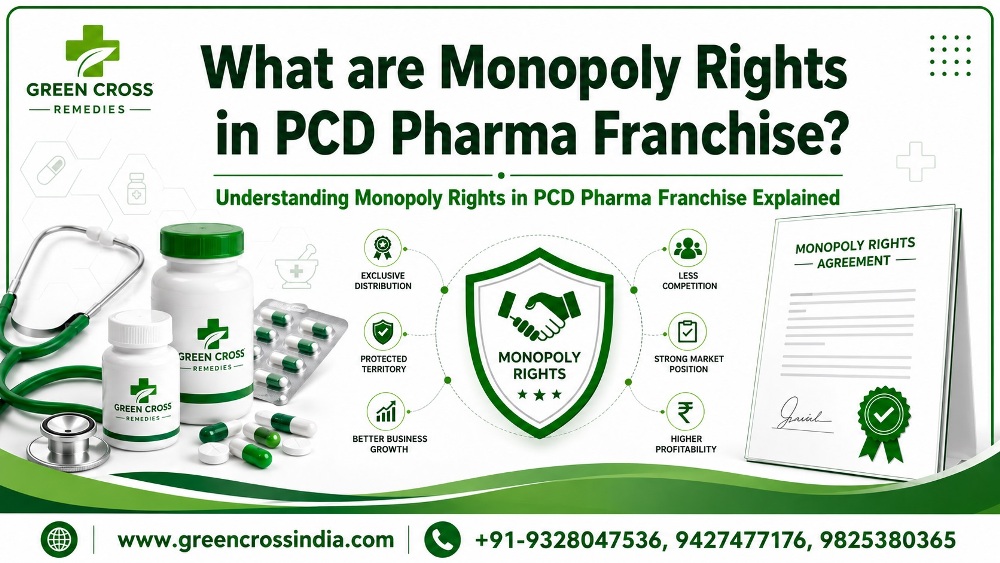
Understanding Monopoly Rights in PCD Pharma Franchise Explained
Introduction
Explore the complexities of monopoly rights in the PCD pharma franchise landscape, empowering your business with critical insights for success.
The pharmaceutical industry in India has grown distinctly over the past few decades. One of the most reachable enterprise models for aspiring entrepreneurs is the PCD pharma franchise. But there may be one term that comes up time and again in this business — monopoly rights.
If you have ever spoken to anybody inside the pharma franchise enterprise, you have probable heard them ask, "Are you giving monopoly rights?" or "Do you have got monopoly on your area?" These questions aren't just informal talk. They point to one of the maximum essential factors that decide whether a pharma franchise succeeds or struggles.
In this article, we will break down everything you need to know about monopoly rights in PCD pharma franchise. We will keep the language easy, the examples clear, and the advice practical. Whether you're a new entrepreneur or an existing franchise owner looking to expand, this guide is for you.
At Green Cross Remedies, we believe in empowering our franchise partners with clear policies and real monopoly rights. Let us dive in.
What are Monopoly Rights?
Let us begin with the simplest definition.
Monopoly rights in the context of a PCD pharma franchise mean that a particular franchisee receives exclusive permission to promote and sell a company's products in a specific geographical area. No other franchisee or distributor of the same company can operate in that area.
Think of it like this. You are given a key to a territory. That territory is yours alone. No one else from your pharma company can come and sell the same products to the same doctors, hospitals, or chemists in your area.
In simple words — monopoly rights = exclusive territory = no internal competition.
For example, if you take a PCD pharma franchise from Green Cross Remedies for the city of Nagpur with monopoly rights, then no other franchisee of Green Cross Remedies can sell our products in Nagpur. You become the sole representative of our brand in that city.
This is different from a non-monopoly or open franchise model, where multiple distributors from the same company can operate in the same area, often leading to price wars and confusion among customers.
Importance of Monopoly Rights in the Pharma Industry
The pharma industry in India is highly competitive. There are thousands of companies, lakhs of distributors, and crores of customers. In such a crowded space, having a clear advantage matters a lot.
Monopoly rights provide that advantage. Here is why they are so important.
First, monopoly rights protect your investment. When you take a franchise, you invest money in buying stock, hiring medical representatives, printing promotional materials, and building relationships with doctors. If another franchisee from the same company enters your area, your investment is at risk. They could offer lower prices or target the same doctors, and your hard work starts losing value.
Second, monopoly rights build trust with doctors. When a doctor knows that you are the only person representing a particular pharma brand in their area, they feel more confident. They do not have to worry about getting conflicting prices or dealing with multiple representatives from the same company. This trust translates into more prescriptions for your products.
Third, monopoly rights allow you to plan for the long term. You can invest in building a strong network without fear that someone else will come and take away your customers. You can hire staff, buy stock in bulk, and offer credit to retailers because you know the territory is yours for the long run.
At Green Cross Remedies, we have seen how monopoly rights transform ordinary franchisees into successful business owners. When a person knows their area is protected, they work harder and smarter.
How Monopoly Rights Work in PCD Pharma Franchise
Now let us understand the practical working of monopoly rights.
When you sign an agreement with a pharma company for a monopoly-based PCD franchise, the agreement clearly mentions the territory assigned to you. This territory could be:
A district (for example, Jaipur district)
A city (for example, Lucknow city)
A group of pin codes (for example, all areas under 452001 to 452010)
A state (rare, usually for very large franchisees)
Once the territory is assigned, the pharma company agrees not to appoint any other franchisee or distributor in that territory for the same product range.
However, there are some important details to understand.
Product range matters. Monopoly rights are usually for the company's entire product portfolio, but sometimes they are limited to specific therapeutic categories. Always check what products are included in your monopoly agreement.
Time period matters. Some companies give monopoly rights for a limited period, say one year, after which they may renew or revise. Others give long-term monopoly rights. At Green Cross Remedies, we believe in long-term partnerships, so we offer sustainable monopoly arrangements.
Performance clauses matter. Many companies include a clause that says if you do not meet minimum purchase targets, the monopoly rights can be cancelled. This is fair because the company also needs to do business. But make sure the targets are realistic.
Once the agreement is signed, you start your operations. You promote the company's products to doctors, stockists, and hospitals in your territory. The company supplies products directly to you. No other franchisee interferes in your area.
APPLY FOR PCD PHARMA FRANCHISEBenefits of Having Monopoly Rights
Let us list the concrete benefits that monopoly rights bring to a PCD pharma franchise owner.
1. No Internal Competition
This is the biggest benefit. You do not have to compete with someone from your own company. Your competition is only with other pharma brands, not with your own team.
2. Better Pricing Control
When you are the only seller of a brand in your area, you can maintain consistent pricing. There is no undercutting. Your retailers and chemists also appreciate this stability.
3. Stronger Doctor Relationships
Doctors prefer stability. When you tell a doctor that you are the sole authorised representative of Green Cross Remedies in that city, the doctor knows exactly who to contact for any product inquiry or complaint. This builds long-term professional relationships.
4. Higher Profit Margins
Because there is no internal price war, your margins remain protected. You can also build volume over time without fear of losing customers to another franchisee of the same company.
5. Better Inventory Management
When you know your territory is secure, you can plan your stock better. You can order in bulk, save on transportation costs, and maintain adequate stock levels without worrying about sudden competition.
6. Brand Building Opportunity
Monopoly rights allow you to build the company's brand in your area as if it were your own business. Over time, doctors and patients start associating the brand with you personally. This increases your value as a franchisee.
7. Easy to Scale
Once you have successfully managed one territory, you can ask for additional territories. Many successful franchise owners start with one district and then expand to neighbouring districts because the company trusts their performance.
At Green Cross Remedies, our monopoly-based franchise partners consistently report higher satisfaction and better business growth compared to non-monopoly arrangements.
Legal Aspects of Monopoly Rights in Pharma
Monopoly rights in pharma franchise are not governed by a single law. Instead, they come from the contract agreement signed between the franchisor (pharma company) and the franchisee (you).
Here are the key legal aspects you should know.
Written Agreement is a Must
Verbal promises have no value. Always get your monopoly rights in writing. The agreement should clearly state the geographical boundary of your monopoly territory.
Duration of Monopoly
The agreement should specify how long the monopoly rights will last. It could be one year, three years, five years, or longer. Also check if the agreement automatically renews or if you need to sign a new one.
Termination Clauses
Read the termination clause carefully. Under what conditions can the company cancel your monopoly rights? Common reasons include non-payment, violating company policies, selling fake or duplicate products, or not meeting sales targets.
Renewal Terms
What happens when the agreement period ends? Does the company have the right to appoint someone else? Can you renew on the same terms? These questions should be answered in the agreement.
Product Exclusions
Sometimes, the company may keep certain products out of the monopoly arrangement. For example, very high-demand products might be sold through a separate distribution channel. Make sure you know what is included and what is not.
Dispute Resolution
The agreement should mention how disputes will be resolved — through arbitration, mediation, or court. It should also mention which city's courts have jurisdiction.
Non-Compete Clause
Some agreements include a clause that says you cannot sell products of competing pharma companies. This is common but should be reasonable. Read this clause carefully.
Important Note: While we provide guidance, we always recommend that you consult a lawyer before signing any franchise agreement. Every situation is different, and legal advice tailored to your specific case is valuable.
Challenges Faced by Franchisees without Monopoly Rights
Not every PCD pharma franchise comes with monopoly rights. Some companies offer open franchise models. Let us look at the challenges franchisees face when they do not have monopoly rights.
1. Price Wars
When multiple franchisees of the same company operate in the same area, they often start reducing prices to attract customers. This destroys profit margins for everyone. In the end, only the customer benefits, while franchisees suffer.
2. Doctor Confusion
Imagine a doctor receives visits from three different representatives of the same pharma company, all offering different schemes and prices. The doctor gets confused and eventually loses trust in the brand. The doctor may stop prescribing that company's products altogether.
3. High Customer Poaching
Without territory protection, franchisees often try to steal each other's customers. This creates a hostile business environment. Instead of focusing on growth, franchisees spend energy on protecting their existing customers.
4. Difficulty in Long-Term Planning
How can you plan to invest in a warehouse, hire staff, or give credit to retailers if you are never sure whether another franchisee will enter your area next month? Uncertainty kills business confidence.
5. Lower Motivation
Franchisees without monopoly rights often feel less motivated to promote the brand aggressively. Why work hard to build a market if someone else can walk in and take it? This lack of motivation hurts both the franchisee and the pharma company.
6. Higher Wastage
When competition increases, some franchisees are left with expired stock because they could not sell in time. This leads to financial losses and wastage of medicines.
At Green Cross Remedies, we have heard many such stories from franchisees who joined other companies without monopoly rights. That is why we have built our entire PCD model around genuine monopoly protection.
How to Acquire Monopoly Rights in a PCD Pharma Franchise
If you are convinced that monopoly rights are essential, here is a step-by-step guide to acquiring them.
Step 1: Research Pharma Companies
Not every pharma company offers genuine monopoly rights. Some claim to offer monopoly but actually appoint multiple franchisees in the same area. Research companies thoroughly. Look for reviews, talk to existing franchisees, and check the company's track record.
Step 2: Shortlist Companies with Clear Policies
Make a list of companies that have transparent policies about territory allocation. At Green Cross Remedies, for example, we clearly define territories and do not overlap.
Step 3: Discuss Territory Options
Contact the companies and ask about available territories in your area of interest. Some territories may already be taken. Ask for a list of available districts or pin codes.
Step 4: Ask for a Written Agreement Draft
Before you pay any deposit or buy any stock, ask for a draft of the franchise agreement. Read the monopoly clause carefully. Look for the exact words that describe your exclusive territory.
Step 5: Verify Performance Expectations
Most companies will expect you to meet certain purchase targets to retain monopoly rights. Ask for these targets in writing. Make sure they are realistic for your territory size and potential.
Step 6: Take Legal Advice
Spend a little money on a lawyer who understands franchise agreements. A good lawyer can spot unfair clauses and help you negotiate better terms.
Step 7: Sign and Start
Once everything is clear, sign the agreement, pay the required deposit or initial stock amount, and start your operations. Keep a copy of the agreement safely.
Step 8: Regularly Communicate with the Company
Maintain good communication with the pharma company. Inform them about your progress, challenges, and plans. A company that trusts you is more likely to renew your monopoly rights and even offer you additional territories.
Case Studies: Successful PCD Pharma Franchises with Monopoly Rights
Let us look at some real-life examples of how monopoly rights have helped franchise owners succeed.
Case Study 1: Small District, Big Success
Mr. Sharma took a PCD franchise from a reputable pharma company like Green Cross Remedies for a small district in Madhya Pradesh. The district had a population of approximately 15 lakh people. He was given monopoly rights for the whole district.
In the first year, he focused on building relationships with 50 general physicians and 10 specialists. Because there was no other franchisee from his company, the doctors trusted him completely. By the end of the third year, his monthly purchase from the company had grown from ₹50,000 to ₹4 lakh. He now employs four medical representatives and is looking to take another district.
Case Study 2: From One City to Three Cities
Mrs. Desai started her PCD franchise for a single city in Gujarat with monopoly rights. She focused on cardiac and diabetic products because those patients need lifelong medication. Her consistent efforts and the trust of local doctors helped her business grow steadily.
After two successful years, her pharma company offered her two more neighbouring cities on a monopoly basis. She now operates across three cities with a team of twelve people.
Case Study 3: Overcoming Competition
Mr. Khan initially joined a company that did not offer monopoly rights. Within six months, three other franchisees of the same company entered his area. His business crashed. He lost money and confidence.
Then he switched to Green Cross Remedies. He took monopoly rights for his district. Within one year, he recovered his losses and started making profit. Today, he says that monopoly rights are non-negotiable for him.
These cases show a simple truth — monopoly rights are not just a luxury. They are a necessity for long-term success in the PCD pharma franchise business.
Conclusion and Future Trends in PCD Pharma Franchising
Monopoly rights in PCD pharma franchise are the foundation of a stable, profitable, and growing business. They protect your investment, build trust with doctors, and give you the confidence to plan for the long term.
As the pharma industry becomes more organised and competitive, the demand for genuine monopoly rights will only increase. Franchisees are becoming more aware. They are no longer happy with vague promises. They want clear, written agreements that define their territory.
At the same time, pharma companies that offer transparent monopoly policies will attract better franchisees and grow faster. Companies that continue with open, overlapping models will struggle to retain good partners.
Another trend we are seeing is the use of technology to manage territories. Some companies now use software to track pin codes and ensure no overlap. This is a positive development.
What should you do?
If you are planning to start a PCD pharma franchise, make monopoly rights your top priority. Do not compromise on this. Ask questions. Read agreements carefully. Talk to existing franchisees. And choose a company that values your success as much as its own.
At Green Cross Remedies, we have built our entire PCD franchise model around the principle of genuine monopoly rights. We believe that when our franchise partners succeed, we succeed. That is why we clearly define territories and protect them.
If you are looking for a reliable pharma partner that offers real monopoly rights, we invite you to get in touch. Let us grow together.
Frequently Asked Questions (FAQ)
Q1. What is the meaning of monopoly rights in PCD pharma franchise?
Monopoly rights mean that a franchisee receives exclusive permission to sell a pharma company's products in a specific geographical area. No other franchisee of the same company can operate in that area.
Q2. Are monopoly rights legally binding?
Yes, when they are written into a signed franchise agreement, they are legally binding. Verbal promises are not enforceable.
Q3. Can a pharma company take back monopoly rights?
Yes, if the franchise agreement has clauses for termination — such as not meeting sales targets, violating policies, or non-payment — the company can take back monopoly rights.
Q4. How do I verify if a company gives genuine monopoly rights?
Talk to existing franchisees of that company. Ask them if any other franchisee of the same company operates in their area. Also, read the agreement carefully.
Q5. Is monopoly rights the same as exclusive distribution rights?
Very similar. Monopoly rights in pharma franchise usually mean exclusive distribution and promotion rights for a defined territory.
Q6. Does Green Cross Remedies offer monopoly rights?
Yes, Green Cross Remedies offers genuine monopoly rights to its PCD franchise partners. We clearly define territories and do not overlap.
Q7. What happens if another franchisee violates my monopoly territory?
You should immediately inform the pharma company in writing. The company is obligated to enforce the monopoly clause. If they do not, you may have legal grounds to terminate the agreement.
Q8. Can I sell products outside my monopoly territory?
Typically, no. Your monopoly rights apply only to your assigned territory. Selling outside may violate the agreement.
Q9. How long do monopoly rights last?
It depends on the agreement. Common durations are 1 year, 3 years, or 5 years, often with renewal options.
Q10. Do I need a lawyer to review the monopoly clause?
Strongly recommended. A lawyer can spot unfair clauses and help you negotiate better terms.
Disclaimer
The information provided in this article is for general informational purposes only and does not constitute legal advice. Pharma franchise agreements vary by company and jurisdiction. You are strongly advised to consult a qualified legal professional before signing any agreement. Green Cross Remedies does not assume any liability for decisions made based on this content.
Ready to start your PCD pharma franchise with genuine monopoly rights?
Contact Green Cross Remedies today.
Website: www.greencrossindia.com
Chat With Us On Whatsapp For Pcd Pharma Franchise